Weekly Cinema WTF
Hollywood's relationship with U.S. foreign policy: dissected, lit on fire, examined in the ashes.
White America - Eminem
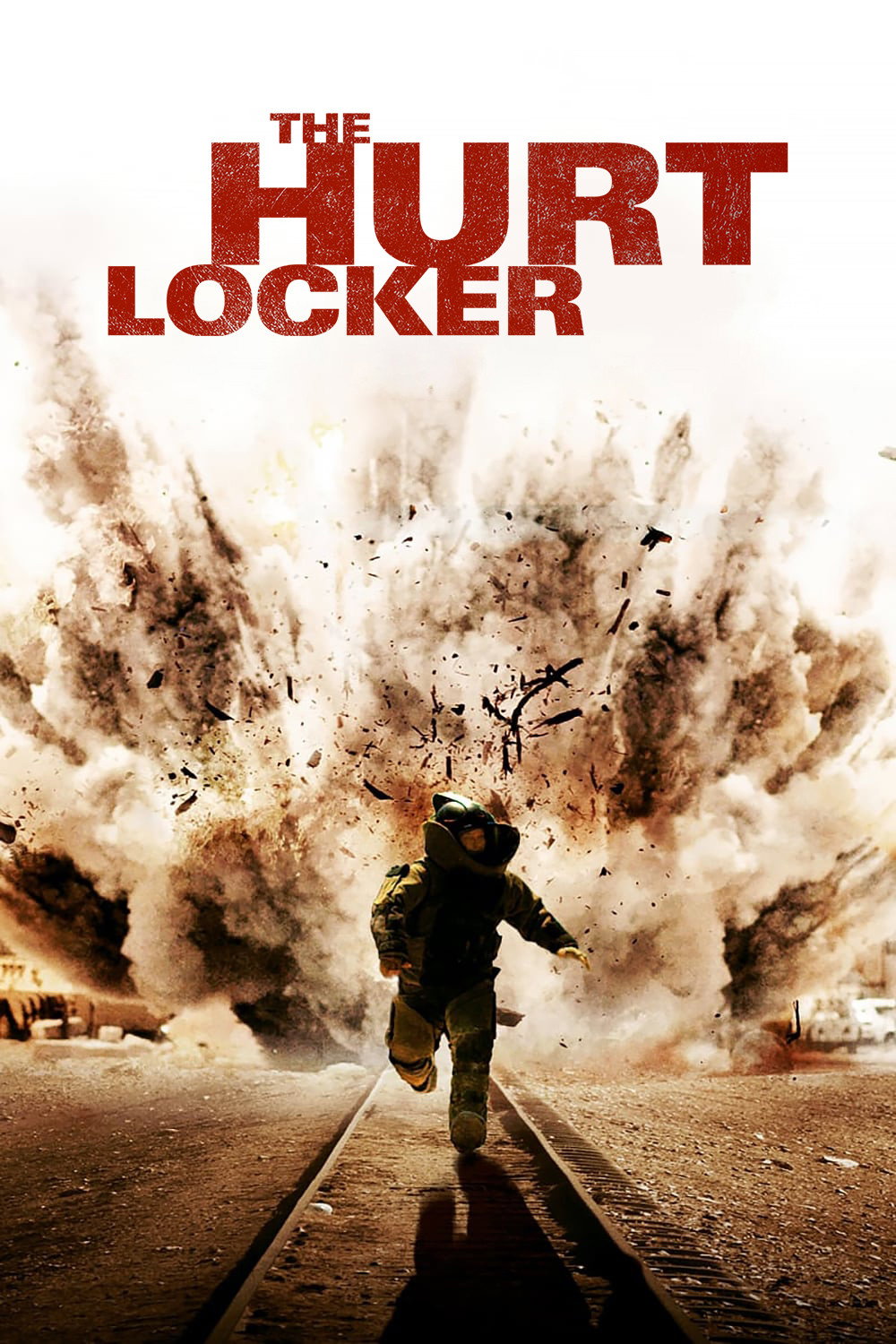
This Week: The Hurt Locker (2008)
The Hurt Locker won six Academy Awards including Best Picture and Best Director, made Kathryn Bigelow the first woman to win that latter category, and was almost universally celebrated by critics as the definitive cinematic statement on the Iraq War. It is also, according to the actual people who did the job it depicts, a pile of operationally reckless horseshit that would get real soldiers killed if anyone took it seriously as a procedural reference. Both of those things are true simultaneously. That's exactly the problem.
The film follows a three-man Army EOD — Explosive Ordnance Disposal — team in Baghdad in 2004, centered on Staff Sergeant William James, played by Jeremy Renner, a bomb technician who approaches his work with the reckless, adrenaline-chasing bravado of a man who has confused courage with a death wish. He wanders into kill zones without infantry support. He removes his radio equipment because it bothers him. He abandons his team during missions to pursue personal vendettas. He free-lances. He ignores protocol at every turn and is rewarded for it narratively because the film needs him to be a compelling protagonist rather than the massive liability he would be in any actual operational context.
Real EOD technicians were not subtle in their response. Veterans who actually did this job in Iraq came out publicly and repeatedly to describe the film as dangerously inaccurate — not in the minor details-got-wrong way that all war films suffer from, but fundamentally, structurally wrong about how EOD operates, what the culture is actually like, and what the work actually demands. EOD does not operate the way this film depicts. You don't go anywhere near an IED without infantry escort establishing a perimeter. You don't freelance. You don't remove your radio. You don't wander off on solo night missions through Baghdad because you have a feeling. The protocols exist because the people who ignored them are dead.
SFC Jeffrey Sarver, an actual EOD veteran, filed a lawsuit claiming the James character was based directly on him without his consent or compensation. The suit was eventually dismissed on legal grounds. His underlying claim — that a real person's identity and experience had been appropriated and then wildly distorted into a Hollywood archetype — was never meaningfully addressed by the filmmakers.
The film's thesis, stated explicitly in its opening title card, is that war is a drug. That's the lens through which everything is filtered — James doesn't do this job because of duty, training, camaraderie, or a genuine commitment to protecting his fellow soldiers from IEDs. He does it because he's addicted to the adrenaline, because civilian life is too quiet, because the bomb suit is the only place he feels real. The film ends with him back in Iraq, choosing another tour over his wife and infant son, because the war owns him. Roll credits.
That thesis would be fine — would actually be a legitimate and interesting thing to explore — if it were presented as one man's specific pathology rather than a universal statement about soldiers and war. Instead the film presents it as profound insight into the nature of combat and the men who seek it. Veterans, psychologists, and journalists who spent time embedded with actual EOD units described a culture defined by professionalism, rigid adherence to protocol, intense team cohesion, and a complete absence of the lone cowboy mythology the film treats as its emotional core. The "war is a drug" framing isn't wrong as a description of some soldiers' experience. It's irresponsible as a generalization presented as truth, and it's specifically irresponsible applied to a job where the cowboy who ignores procedure kills himself and the people next to him.
What makes this fit squarely in the Cinema WTF framework rather than the "leaves out context" pile is precisely that distinction: this isn't a film following the ground-level perspective of people who were actually there. This is a film that invented a ground-level perspective — one that actual ground-level people immediately and loudly rejected — and then won six Oscars for the invention. The soldiers who did this job didn't recognize themselves or their work in this film. They recognized a Hollywood archetype wearing their uniform.
Kathryn Bigelow made a technically accomplished, beautifully shot, genuinely tense film. She also made a film about a job she researched from the outside, filtered through a screenwriter's thesis about addiction and masculinity, that the people who actually did that job called bullshit on publicly and consistently. The Oscars didn't ask them. The critics didn't ask them. The film grossed $49 million, swept awards season, and became the default cultural reference point for EOD work in Iraq — which means the version of that work that most people carry in their heads is the one the actual practitioners said was wrong.
The men who actually walked up to IEDs in Baghdad would like a word with the Academy. The Academy has already moved on.
"War is a drug."
— The film's opening thesis, attributed to Chris Hedges.
Chris Hedges has since said he finds the film's use of his work reductive. The beat goes on.
This week's Cinema WTF dressed a screenwriter's thesis about addiction and masculinity in an EOD uniform, won six Oscars for the costume, and left the actual EOD veterans to watch the wrong version of their job become the only version most people will ever see.