Weekly Badasses
The people who didn't fold. The ones who pushed back when pushing back cost something real.
Harder Than You Think - Public Enemy
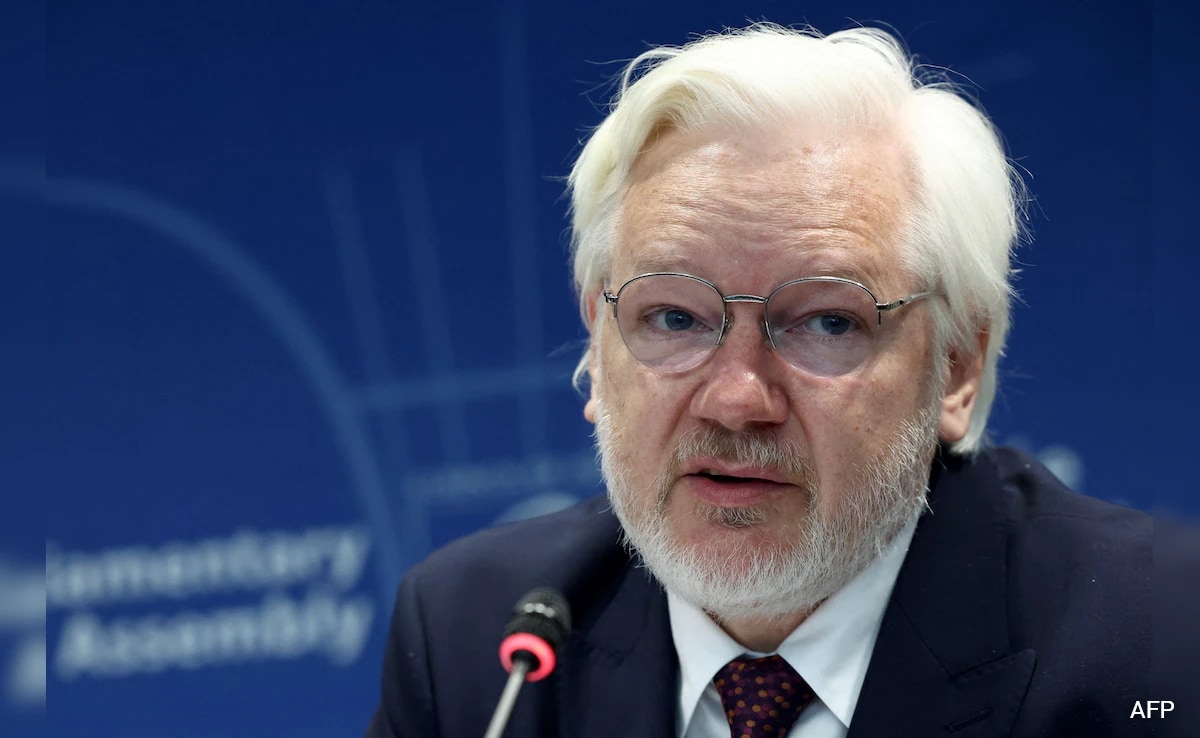
🇺🇸 Weekly U.S. Badass: Julian Assange
Julian Assange is not American. He's Australian. We're featuring him here anyway because the United States government spent fourteen years and an incalculable amount of political capital trying to imprison him for publishing documents that proved American war crimes — and that makes him the most relevant person to this section of the site regardless of his passport. The U.S. wanted him badly enough to pressure a foreign government, surveil a diplomatic embassy, and construct an extradition case that press freedom organizations across the political spectrum called an existential threat to journalism. You don't get that kind of attention for being irrelevant.
Assange founded WikiLeaks in 2006 with a straightforward premise: obtain documents that governments and corporations want buried, verify them, and publish them in full so the public can read the actual primary source material rather than whatever filtered version power decides they're allowed to see. The model worked. WikiLeaks published the Collateral Murder video in 2010 — classified U.S. military footage of an Apache helicopter crew killing a group of Iraqi civilians including two Reuters journalists, laughing while doing it, and then firing on the van that arrived to help the wounded. The U.S. government's position was that this footage should remain classified. WikiLeaks' position was that the public had an interest in knowing their military was doing this in their name. You can decide who was right.
The same year WikiLeaks published the Afghan War Logs and the Iraq War Logs — hundreds of thousands of classified documents detailing civilian casualty counts the military had been systematically underreporting, torture by U.S.-backed forces, and operational details that painted a picture of both wars significantly uglier than official briefings had suggested. Then came the State Department cables — diplomatic communications revealing the candid private assessments of American diplomats about foreign leaders, including allies, that bore essentially no relationship to the public positions being stated simultaneously.
The source for much of this material was Chelsea Manning, an Army intelligence analyst who concluded that the public had a right to know what she was seeing and paid fourteen years of her life for that conclusion. Assange published what she provided. Governments that had been embarrassed by the publications immediately began working to destroy him for it.
He sought asylum in the Ecuadorian embassy in London in 2012 and lived there for seven years — a single room, no sunlight, no freedom of movement, continuous surveillance including, it was later revealed, by the CIA which had considered kidnapping or assassinating him on British soil. Ecuador eventually withdrew his asylum in 2019 under sustained American pressure, British police dragged him out, and he spent the next five years in Belmarsh Prison — a maximum security facility — while American extradition proceedings ground through British courts.
He was released in June 2024 as part of a plea deal in which he pleaded guilty to a single count of conspiracy to obtain and disclose national defense information. He served no additional prison time beyond the years already spent in Belmarsh and returned to Australia. The U.S. got a guilty plea. He got his freedom. The precedent being set for journalists who publish classified material proving government wrongdoing remains deeply, deliberately unresolved.
Every major press freedom organization — the Committee to Protect Journalists, Reporters Without Borders, the ACLU — opposed his prosecution on the grounds that the Espionage Act charges, if successfully applied to a publisher, would criminalize standard journalistic practice. The New York Times, the Guardian, Der Spiegel, and Le Monde all published the same WikiLeaks material. None of them were prosecuted. Assange was. The difference was that he was easier to get and made a more convenient example.
He published proof of war crimes. The governments who committed them spent fourteen years trying to imprison him for it. The documents are still there. So is the footage. So is the body count.
"If wars can be started by lies, they can be stopped by truth."
This week's Badass published the receipts on American war crimes, spent fourteen years in an embassy and a prison for it, and walked out with the documents still in circulation and every government that wanted them buried still unable to bury them.
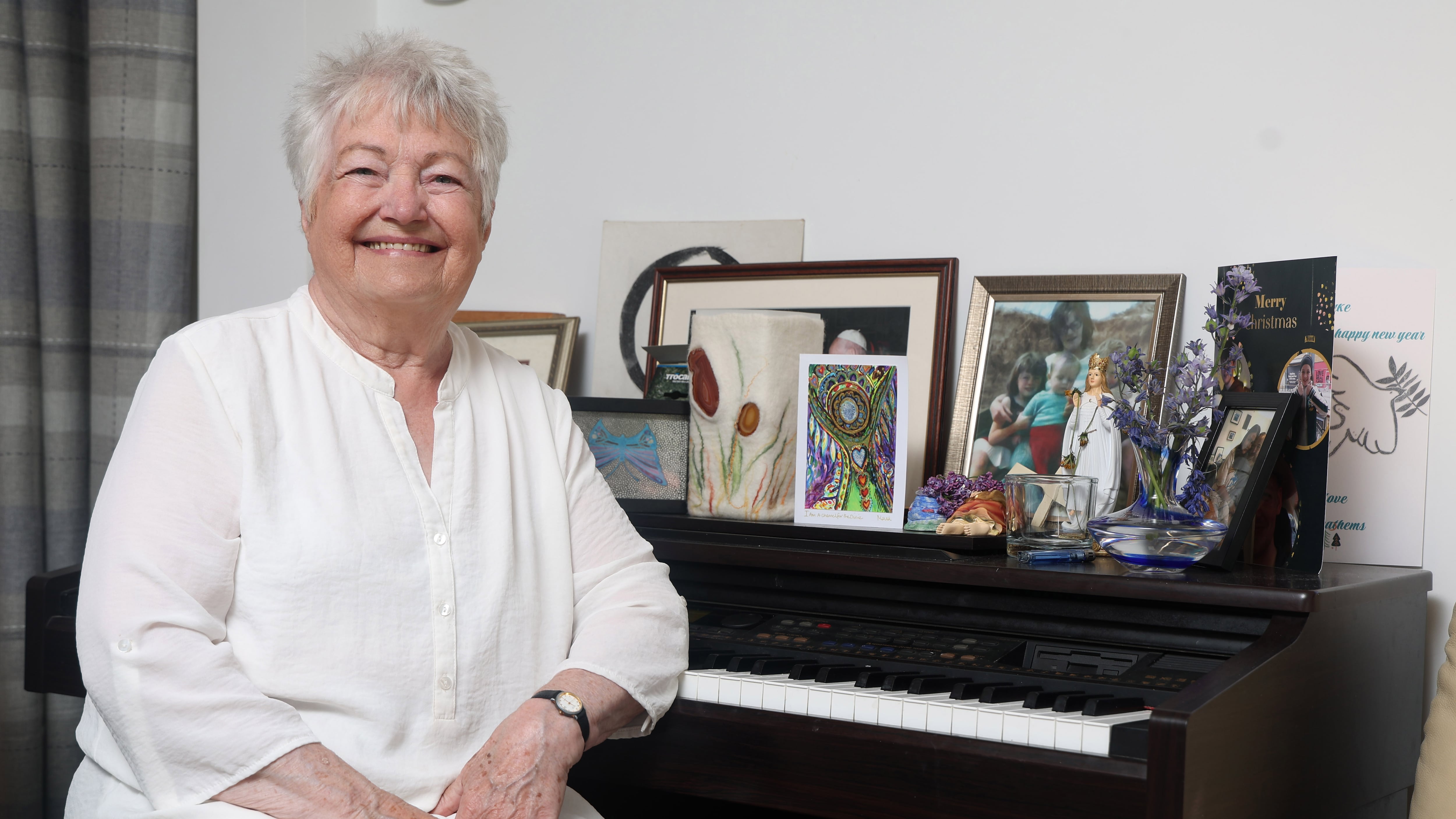
🌍 Weekly International Badass: Mairead Corrigan
Mairead Corrigan watched three of her sister's children get killed by a car in Belfast on August 10, 1976. The driver was an IRA member shot dead by British soldiers during a chase — his car, out of control, mounted the pavement and killed Anne Maguire's children: Joanne, aged eight, John, aged two, and Andrew, six weeks old. Anne survived. She never recovered. She died by suicide in 1980.
Mairead was at the scene. She watched it happen. And rather than let that atrocity calcify into one more entry in Northern Ireland's ledger of sectarian violence met with more sectarian violence, she did something the Troubles made genuinely dangerous: she organized across the line.
Within days she co-founded the Community of Peace People with journalist Ciaran McKeown and Betty Williams, a Protestant woman who had witnessed the crash. In a Northern Ireland carved into hard, violent, mutually hostile communities where crossing sectarian lines could get you killed by your own side, they organized joint Catholic-Protestant peace marches that drew tens of thousands of people — first in Belfast, then across Northern Ireland, then in Dublin and London. The marches were met with hostility from paramilitaries on both sides who correctly identified mass popular demand for peace as a threat to their operational relevance.
The IRA called them traitors. Loyalist paramilitaries threatened them. Elements of both communities who had organized their entire identities around the conflict treated ordinary people demanding an end to it as the enemy. Corrigan and Williams were physically attacked at some marches. They kept going. In 1976, both women were awarded the Nobel Peace Prize — one of the fastest Nobel recognitions in the prize's history, awarded while the work was still actively happening and actively dangerous.
The Peace People movement didn't end the Troubles — that took until the Good Friday Agreement in 1998, another twenty-two years of death and negotiation. What Corrigan and Williams did was demonstrate, at a moment when the violence felt total and permanent, that there was a substantial population on both sides of the sectarian divide that wanted out of the cycle and was willing to say so publicly at personal risk. That demonstration matters. Movements need proof of concept. The Peace People were proof that ordinary people in Northern Ireland wanted something different badly enough to march for it through threats and violence.
Corrigan has continued working in conflict zones and peace initiatives internationally for decades since — visiting prisoners, opposing nuclear weapons, advocating for Palestinian rights, showing up in places where showing up costs something. She has never been particularly interested in the comfortable version of peace activism.
She stood at the wreckage of her sister's children and decided the answer was not more wreckage. In Belfast in 1976, that decision required more courage than most people will ever be asked for.
"Peace is not just the absence of war. It is the presence of justice."
This week's international badass buried three of her sister's children, then walked across every line Belfast had drawn in blood to demand an end to the drawing.
Badass Archives
U.S. Badasses
- Harriet Tubman
- Fred Hampton
- Dorothy Day
- Leonard Peltier
- Ida B. Wells
- Daniel Ellsberg
- Smedley Butler
- Claudette Colvin
- Emma Goldman
- Bayard Rustin
- Chelsea Manning
- Edward Snowden
- Margo St. James
- Fannie Lou Hamer
- Malcolm X
- Sylvia Rivera & Marsha P. Johnson
- Ella Baker
- John Brown
- Howard Zinn
International Badasses
- Raoul Wallenberg
- Sophie Scholl
- Desmond Doss
- Chiune Sugihara
- Berta Cáceres
- Steve Biko
- Oscar Romero
- Nadia Murad
- Tommy Douglas
- Haing S. Ngor
- Marielle Franco
- Jan Egeland
- Ahed Tamimi
- Fazila Gaibi
- Patrice Lumumba
- Arundhati Roy
- Irena Sendler
- Thomas Sankara
- Daphne Caruana Galizia